A villanelle in response to imaginary garden with real toads – The Tuesday Platform
A simple flint tool left the world aghast,
unearthed on a crumbling North Norfolk shore,
led to fossilised footprints from the past.
Found on a coastline that’s receding fast
in the Norfolk village of Happisburgh,
a simple flint tool left the world aghast.
The Happisburgh Handaxe, amongst the vast
sands, seashells and fossils, opened a door;
led to fossilised footprints from the past.
Adapting to the harsh and wintry blast,
chopping and hewing forests of the north,
a simple flint tool left the world aghast.
Early humans from Africa outcast
discarded their tools on the river floor;
led to fossilised footprints from the past.
This axe was not the oldest or the last,
our Norfolk beaches yielded even more:
a simple flint tool left the world aghast
led to fossilised footprints from the past.
© Kim M. Russell, 2016
The Happisburgh Handaxe is approx. 500,000 years old and was discovered on Happisburgh beach in Norfolk in 2000.
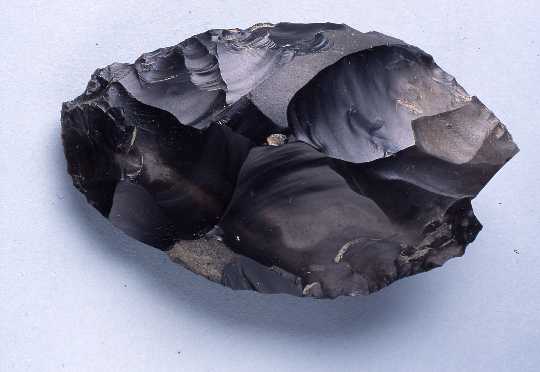
Image found on www.northfolk.org.uk


Fascinating. And you make the villanelle look so easy! (Which it most definitely is not.)
LikeLiked by 2 people
Thank you kindly 🙂
LikeLike
Those fossilised footprints work beautifully through the poem – like rhythms and pulses through time.
LikeLiked by 1 person
🙂
LikeLike
Aha, the villanelle as an educational tool! I enjoyed learning about this beautiful axe, and you succeeded in making the rhymes secondary to the content.
LikeLiked by 1 person
a simple flint tool left the world aghast
led to fossilised footprints from the past.
Love the lines you chose to repeat 😀 powerful Villanelle
LikeLiked by 1 person
Thank you, Sanaa 😊
LikeLike
I love how well the villanelle worked for this informative poem. I applaud you
LikeLiked by 1 person
Thank you kindly 😊
LikeLike
Really well done! I find the vilanelle so difficult, and you’ve done it brilliantly.
LikeLiked by 1 person
Thank you so much 😊
LikeLike
The story of the handax flows so easy with your villanelle, I admire that. Excellent write.
LikeLike
Well done, I love your villanelle, the form reads so smoothly the way you have written it. I admire that very much and the story it tells is interesting too,,,
LikeLiked by 1 person
Thank you kindly 😊
LikeLike
The villanelle is a little hard to write, isn’t it. You did well Kim, I like your story of the Happisburgh Axe. 500,000 years? That’s a bunch.
LikeLiked by 1 person
Oops, wrong link on ‘Jim’ so this one will be better.
LikeLike
So much to like in a well made Villanellle… and to be able to bring such sense to it as well.. love the story of the flint-axe.
LikeLiked by 1 person
An interesting topic. I love “left the world aghast”…..you execute the villanelle most ably.
LikeLiked by 1 person
Thank you 🙂
LikeLike
Wonderful use of the villanelle. I love how you wove the history in–fascinating!
LikeLiked by 1 person
Thank you 🙂
LikeLiked by 1 person
This is my favorite section:
“The Happisburgh Handaxe, amongst the vast
sands, seashells and fossils, opened a door;
led to fossilised footprints from the past.
Adapting to the harsh and wintry blast”
LikeLiked by 1 person
an old poetic form honors an old relic. It’s beautiful in its simplicity.
LikeLiked by 1 person
Thank you, Margaret 😊
LikeLike