In Norwich, where an ancient wooden bridge

once stood, another took its place,

but it was never rid of its use in the witch

trials, and now it is a haunted space.

Where Fye bridge crosses the river

is a handsome part of the city;

the stories it holds would make you shiver

from its horrific and brutal history.

Scolds, strumpets and other women were

accused of being witches

and dunked on a ducking stool in the water

on the site where Fye Bridge is.

Water was so pure an element, it’s said,

that it could repel evil, so if a woman

was innocent she was pulled out dead,

a survivor was a guilty one.

These days the bridge is haunted

by the ghost of a woman in rags,

who was tried at the bridge and burnt.

The spectre accosts strangers and begs

them to help her pick up a bundle of sticks

that kindled the fire that killed her;

beware whoever makes the mistake and picks

them up, they will die in a fire with in the year.


Kim M. Russell, 17th January 2024
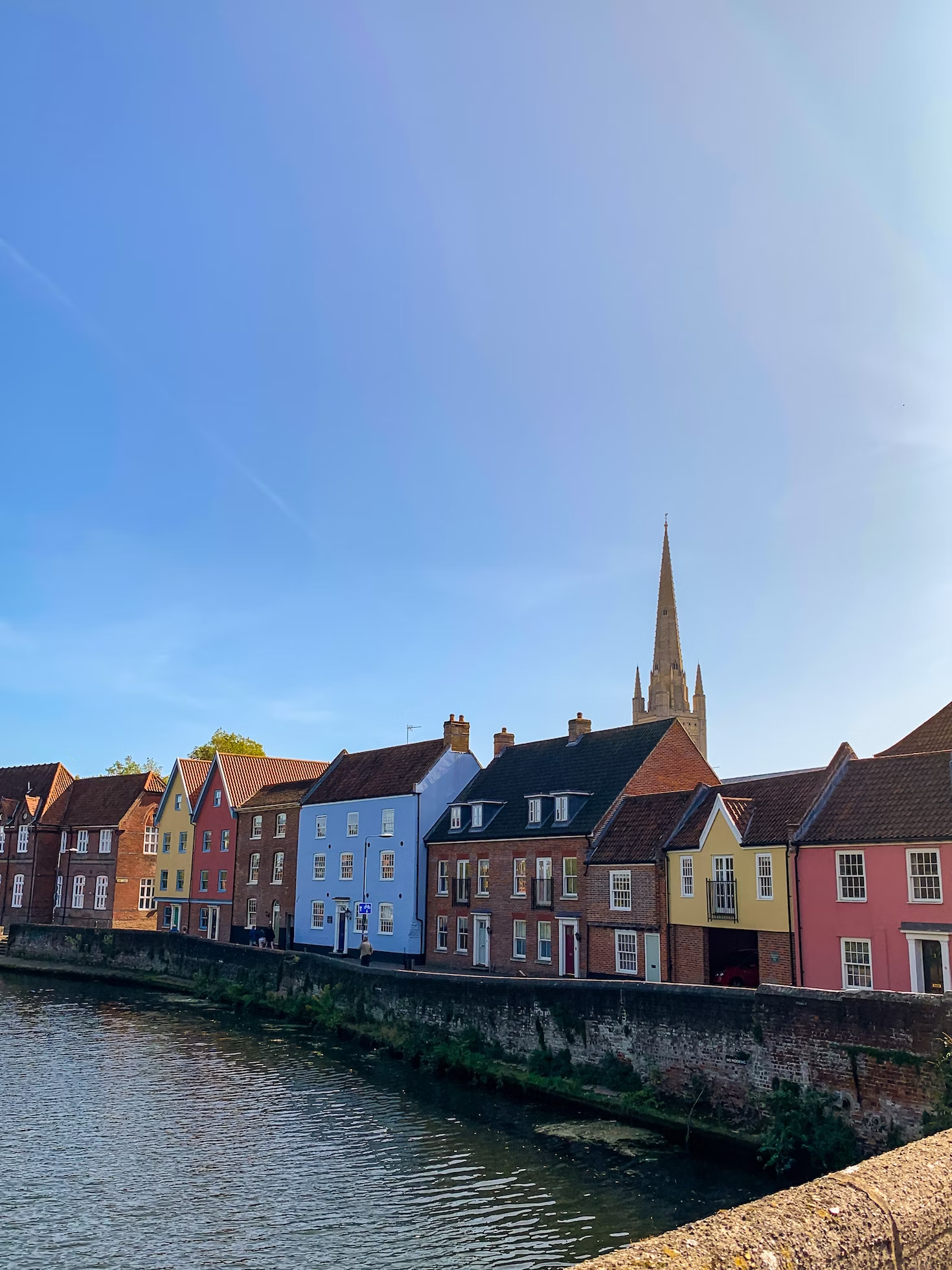
View from Fye Bridge by Archie Eke on Unsplash
Sumana is our host today at What’s Going On? with a prompt that was inspired by the Chapel Bridge of Lucerne, Switzerland: a covered wooden footbridge, the oldest covered bridge in Europe, built in the 14th century. The original bridge in my poem was a wooden one from the twelfth century, replaced in the nineteenth century. Like Sumana’s bridge, mine also ‘breathes stories of the past’.
 writing in north norfolk
I had not realized that England also had their ‘witch trials.’ Not unlike Salem, Massachusetts, in the U.S. Similarly, if a woman was innocent she drowned. From Wikipedia: “Stories circulate about Salem’s witch tests, which include throwing a suspected witch into water while bound. If they floated, they were proven to be a witch; if they drowned, too bad, but at least they weren’t a witch.” What a colorful history the Fye Bridge has! Enjoyed the details.
LikeLiked by 1 person
Thank you, Mary. It was James the Sixth of Scotland and First of England, who was obsessed with and afraid of witchcraft that started the witch hunt in Europe. Shakespeare wrote Macbeth because of him and included the three witches.
LikeLike
Oh my goodness, what horrifying stories. The poor woman in rags who was burned – I can see her. An interesting, if grisly, history. I guess times have always been tough in this world. The innocent drowning is very sad. Heaven knows what they did to the “guilty” ones who survived.
LikeLiked by 1 person
A lot has been written about the witch trials in the UK. In the middle of the 1600s, East Anglia was at the centre of witch trials that were headed by Matthew Hopkins and John Stearne. It was even worse in Scotland, since it was James I who was obsessed with witchcraft. I recently read a book called The Lighthouse Witches by C.J. Cooke, which is set in 1998 and 2021 and draws from folklore dating back to 1662 and a witch-hunt in Scotland.
LikeLike
Wow… a chilling poem! Those old places hold that energy from the women wrongfully accused of witchcraft. What a way to take out someone you didn’t like!
LikeLiked by 1 person
Thank you, Colleen!
LikeLike
A most interesting town history, Kim. Sounds like Old Salem in Massachusetts! Amazing what people do when fear overrides sensibility.
LikeLiked by 1 person
Thank you, Dwight. Our witch began with James 1, which is why there are three witches in Macbeth.
LikeLiked by 1 person
You are welcome. Interesting!
LikeLiked by 1 person
Yikes. That is some powerful dark mojo going on there at that bridge. I think I’ll find an alternate route!
LikeLiked by 1 person
😀
LikeLike
Those ghosts are imprinted on that place. Your poem cast the spell of it well. (K)
LikeLiked by 1 person
Thank you Kerfe!
LikeLiked by 1 person
“. . . another took its place,
but it was never rid of its use in the witch
trials, and now it is a haunted space.” The rhyme puts this story along with “The goblins will get you if you don’t watch out.” But these stories are not superstitions–the horrors really happened. There are eerie echoes of past in present which your poem brings to the foreground. Horrified by the history, I love this poem.
LikeLiked by 1 person
Thank you so much, Susan.
LikeLike
Oh this is an interesting slice of history… and also the bit about Macbeth. Thanks Kim! I read this book called 1599 last year and it is all about how Shakespeare’s plays inform us about the history of his times… fascinating.
LikeLiked by 1 person
Thank you, Rajani. I’m fascinated by this kind of local history and I love Shakespeare.
LikeLiked by 1 person
You’ve made history alive in your lines Kim. Horrific and the same time so very tragic. Even after death the spectre is not acquitted of the evil power she was accused with. The photo of the bridge gave me chill.
LikeLiked by 1 person
Th a k you, Sumana. I like that bridge and it’s view in the daytime. It’s definitely creepy at night. I included it in a novel I started to write some years ago that I really should finish.
LikeLike
What a vivid glimpse of our chequered history
LikeLiked by 1 person
Thank you, Jae.
LikeLike
How interesting! You should finish the novel Kim. Wow!
LikeLiked by 1 person
I hope to get back to it soon.
LikeLike
Kim,
A most interesting account of the Fye Bridge and its scary history.
I have been to Salem, though only for a brief visit. Daytime and caught in weekend traffic at Halloween.
Macbeth is my favourite Shakespeare play; the witches provide an interesting perspective…
LikeLiked by 1 person
Thank you, EIleen.
LikeLike
A chilling piece of history, thank you for sharing!
LikeLiked by 1 person
Thank you, Oloriel!
LikeLiked by 1 person