Spring has dinted winter’s doom – to the delight of wind-blown clouds;
little stirs in snow-stricken woods, save fragile webs.
Rooks in flocks forge homeward, fresh-snapped twigs in beaks,
coal-black and burnished, in branches chattering.
Before March gales come galloping, graceful catkins dance
beneath a pale and partly faded, pink half-hearted sun.
Kim M. Russell, 23rd February 2024
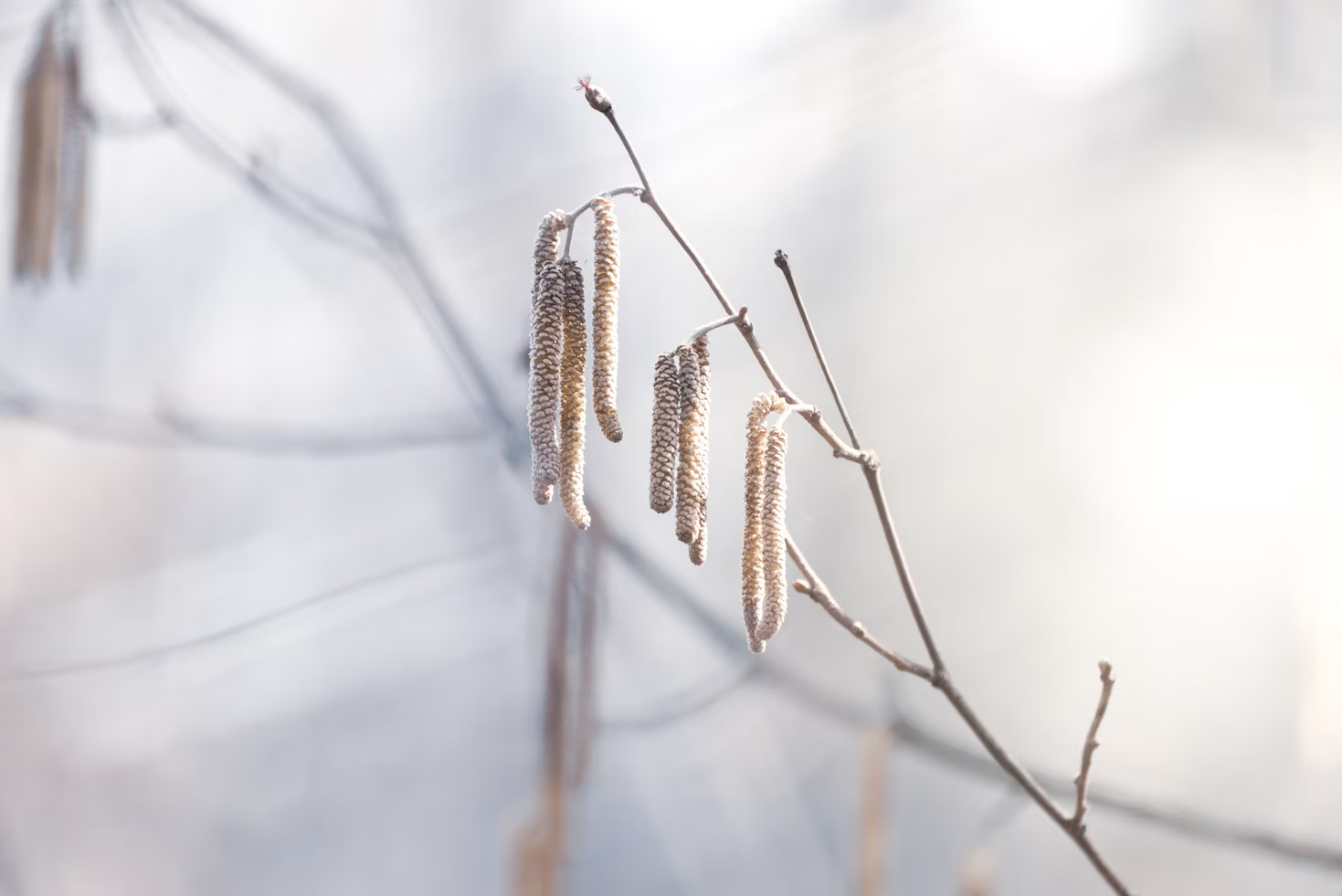
Image by Ganna Aibetova on Unsplash
It’s Thursday and time to meet the bar at the dVerse Poets Pub, with Björn, our barkeep, and a host of wonderful poets. We are revisiting a form dVerse tried more than 10 years ago.
Björn has summarised the form for us, which originates from Germanic (Anglo-Saxon) and Latin, mostly from France and Italy. As he says, the Germanic tradition of poetry was much more suited for storytelling: no syllable counting or worrying about rhyme; more rhythm and alliteration.
The alliterative verse has four stressed syllables per line, whereby the first three syllables alliterate, while the fourth does not. There is also a caesura between the first two stressed syllables and the last two, although, if you want to, you can add a line break or punctuation to make the caesura clear.
Björn has given us an example of his own alliterative verses for inspiration, in which he highlighted the stressed syllables in bold to emphasise the rhythm.
 writing in north norfolk
You had me at the first line, Kim, so perfect the phrasing, “Spring has dinted winter’s doom,” and alliterative rhythm: an announcement that make all our spring-longing hearts to rejoice!
LikeLiked by 2 people
Thanks so much, Dora. I wasn’t sure if I’d got it.
LikeLiked by 1 person
You did, more than … Loved it.
LikeLiked by 1 person
This is a wonderful example, and when reading it alound those alliterative symbles gives the drumbeat of the verse, and I do love the thought of spring coming again.
LikeLiked by 2 people
I’m so pleased you like it, Björn! I wasn’t sure if it fits the bill.
LikeLike
yes that first line sets the beat beautifully
LikeLiked by 1 person
Thank you, Laura.
LikeLike
“Before March gales come galloping, graceful catkins dance
beneath a pale and partly faded, pink half-hearted sun.”
This is so lovely.🥰
LikeLiked by 1 person
Thank you most kindly, Melissa. 💐
LikeLiked by 1 person
The details are quite sensory–you put us right into the landscape. (K)
LikeLiked by 1 person
Thank you, Kerfe!
LikeLiked by 1 person
Wonderfully done Kim
LikeLiked by 1 person
Cheers Kim!
LikeLiked by 1 person
Lots of lovely alliteration here! To my ear, your lines two and four are perfect. I think we both had the same problem with the number of stressed words, reducing them to four in each line. And I couldn’t prevent the stressed words giving the phrase its rhythm. No idea how to do that.
LikeLiked by 2 people
Cheers Jane! I wrestled with rhythm too! 🙃
LikeLiked by 1 person
It’s very tricky! You have such nice sounds though, Kim!
LikeLiked by 1 person
Ooooh you’ve conquered the form so well, Kim! I especially love this small detail you’ve added “fresh-snapped twigs in beaks,” – adds sound and visual. The alliteration is beautifully done.
LikeLiked by 1 person
Thanks so much, Lill!
LikeLike
What a glorious lead-in to Spring in all her splendor. Will take a bit long to show up here. Your poem gives hope.
LikeLiked by 1 person
Thank you, Helen.
LikeLike
Mellisa sent me Kim and I love this. Beautiful imagery❣️
LikeLiked by 1 person
Thank you for reading and enjoying, Cindy!
LikeLike
“Spring has dinted winter’s doom”–nice!
LikeLiked by 1 person
Thank you, Priscilla!
LikeLike
Very nicely done, Kim. I hope the din becomes full blown Spring soon!
LikeLiked by 1 person
Thanks Dwight!
LikeLiked by 1 person
I love all the sounds in this–and all the motion, too. I especially like:
“Rooks in flocks forge homeward, fresh-snapped twigs in beaks,
coal-black and burnished, in branches chattering.”
I
LikeLiked by 1 person
Thank you, Merril!
LikeLiked by 1 person
You’re welcome, Kim!
LikeLiked by 1 person
Kim, you nailed it!
LikeLiked by 1 person
Thanks Lisa!
LikeLiked by 1 person
You’re welcome 🙂
LikeLiked by 1 person
Absolutely gorgeous imagery.
LikeLiked by 1 person
Thanks so much, Stephen!
LikeLiked by 1 person
Such lovely sounds when read aloud and that opening line is so beautiful, Kim!
LikeLiked by 1 person
Thank you, Punam!
LikeLike
Greetings! I edit Forgotten Ground Regained (alliteration.net), a website devoted to modern English alliterative verse. I recently came across this poem, and wanted to let you know I’ve added a link to it to my index of poetry blog posts with alliterative vese, which you can find here:
https://alliteration.net/community/poetswriters/
Thanks for sharing your work!
LikeLike
Thank you for your appreciation, Paul!
LikeLike
Thanks!
A few things that might be of interest to you.
First, I have a “journal of alliterative verse” that I started releasing this winter, and will be putting out again on the 15th of this month and once every quarter thereafter. That’s in magazine format, as a PDF file. You can read the call for submissions here. You and other dverse people might find that of interesst.
Second, my site also has an email discussion forum for people interested in alliterative verse. It’s pretty active and supportive. If you’d be interested in something like that, feel free to join. The join link is https://gaggle.email/join/forgotten-ground-regained@gaggle.email
Finally, Tolkien scholar Dennis W. Wise, recently published Speculative Poetry and the Modern Alliterative Revival: A Critical Anthology, a book which literally contains more original alliterative verse by more poets than anything published since Gutenberg invented the printing press. Fun stuff!
Thanks,
Paul
LikeLiked by 1 person
Thank you, Paul, I’ll find a quiet moment to have a look and pass the details on to the dVerse team.
LikeLike